

Natural remedies and modern medicine: How to effectively combat seasickness


What is seasickness and why does it occur?
Let's face it, the human body is an amazing machine, but sometimes it's a little slow on the uptake. Seasickness isn't actually a sickness in the true sense of the word. It's more like communication noise in your control center.
Imagine you're sitting below deck reading a book (which, by the way, is an idea worthy of a Darwin Award, but we'll get to that). Your eyes report to your brain: "Everything is calm, I'm looking at letters, we're not moving." But your inner ear, that little gyroscope in your head, is screaming, "Alarm! We're rocking like we're on a roller coaster!"
Your brain is as confused as a forest bee in the city. It interprets this discrepancy between sight and balance as a hallucination caused by poisoning. And what does the body do when it thinks it's poisoned? That's right. It tries to get the contents of the stomach out as quickly as possible. It's actually a defense mechanism, even though at that moment you'd rather trade your brain for a rocking horse.

How seasickness manifests itself: Main symptoms
Recognizing that you are coming down with seasickness is not rocket science. It usually starts subtly. Suddenly, you lose your appetite for that delicious sandwich you prepared. You start yawning as if you haven't slept for three days.
The main symptoms include:
- Paleness: You look like the manager of a lime kiln after a night shift.
- Cold sweat: Even if it's 30 degrees outside, you break out in a sweat as if death itself had touched you.
- Excessive salivation: This is a clear sign that your stomach is about to revolt.
- Apathy: Suddenly, you don't care that there are dolphins swimming around or that the captain has reported a hole in the hull. You just want to lie down and suffer.
There is an old sailor's joke that seasickness has two stages. In the first, you fear you will die. In the second, you fear you will not die. And believe me, anyone who has experienced it does not laugh at this joke.
Prevention as the basis for successful sailing
The best way to beat seasickness is to not let it get to you in the first place. Prevention is key. This may mean you have to be a little disciplined, but it's worth it.
Proper preparation before setting sail
I know, you're on vacation. You want to have five beers the night before setting sail and English bacon for breakfast. But if you don't know how your stomach reacts to waves, it's like playing Russian roulette with a full magazine.
- Food: Forget heavy, greasy foods. Have something light. A roll, crackers, a banana. Your stomach should be neither completely empty (which is also bad) nor overfilled with goulash.
- Alcohol: A hangover and seasickness are a deadly combination. It's like someone hitting you over the head with a club while spinning you around in an office chair. So be careful with the rum, pirates.
- Sleep: Fatigue is nausea's best friend. Get a good night's sleep.
Choosing the ideal place on the ship
Physics is relentless. The ship rocks around its center of gravity. Where does it rock the least? In the middle of the ship and as low as possible (close to the waterline). If you feel seasick, don't climb onto the bow (where it bounces up and down like a trampoline) or the flybridge (where it sways from side to side).
Find a place in the middle of the ship, ideally in the fresh air. Locking yourself in a cabin in the early stages is a recipe for disaster. There is no air, you cannot see outside, and the sensory conflict will only get worse.

Natural ways to relieve nausea
Not everyone wants to stuff themselves with chemicals right away. If you prefer a "organic" approach, or simply don't want to sleep through your vacation, try nature.
The power of ginger and herbs
Ginger is a miracle. Seriously. Asian sailors chewed it back when Europe still believed the earth was flat. Ginger calms the stomach. You can buy ginger candies, dried ginger, or make a strong tea. You can also find concentrated ginger tablets (e.g., Antimetil) at the pharmacy, which are great if you can't stand the spicy taste of ginger.
Acupressure and modern bracelets
This is a somewhat controversial topic. Some people swear by them, while others claim they are a placebo. Acupressure bracelets work by applying pressure to the P6 (Nei-Kuan) point on the inside of the wrist. According to Chinese medicine, this harmonizes the energy in the body and suppresses nausea.
There are also electronic bracelets that send weak electrical impulses to the wrist. It sounds a bit like a torture device, but it is said to disrupt the confused signals to the brain. Does it work? It's hard to say. But when you feel sick, you'll try anything, right?
Modern medicine: What medications help?
When ginger and meditation fail, it's time to bring out the heavy artillery. Pharmacy has given us gifts that can eliminate seasickness, or at least dull it.
Over-the-counter preparations and chewing gum
Kinedryl: A Czech classic. We all know it from bus trips to Croatia. It works reliably, but it has one disadvantage—it makes you sleepy. If you take it, you will probably spend the cruise in a semi-coma. Which, honestly, may be the ideal solution for some people.
TravelGum: Chewing gum for nausea. Their advantage is that the active ingredient is absorbed through the mucous membrane in the mouth, so they work faster and you don't have to swallow anything (which is nice when your stomach is already on strike). They are great as an "emergency brake" when you feel it coming on.
Prescription medications for more severe cases
If you know you belong to the unfortunate group of people who vomit at the sight of a bathtub full of water, see your doctor before you travel.
Torecan: Available in tablets and suppositories. And don't laugh. When you're vomiting so badly that you can't keep even a teaspoon of water down, a suppository is the only way to get the medicine into your system. It could save your vacation (and your dignity).
Stugeron: Very popular among sailors because it doesn't make you sleepy, but unfortunately it is harder to obtain in the Czech Republic or is available only on prescription for other diagnoses.
Warning: Always read the package insert. Combining motion sickness medication with alcohol is a terrible idea – at best, you'll fall asleep at the bar; at worst, you'll feel even worse.
First aid: What to do when seasickness strikes
So you didn't make it. You left the ginger at home, didn't take your Kinedryl in time, and now you're standing at the railing feeling sick. What now?
1, Look at the horizon: This is the holy grail. Fix your gaze on a fixed point on the horizon. It will help your brain figure out what's going on. "Ah, that line isn't moving, it's the ship that's moving."
2, Get some fresh air: A breath of fresh air works wonders. Below deck is off-limits at this point.
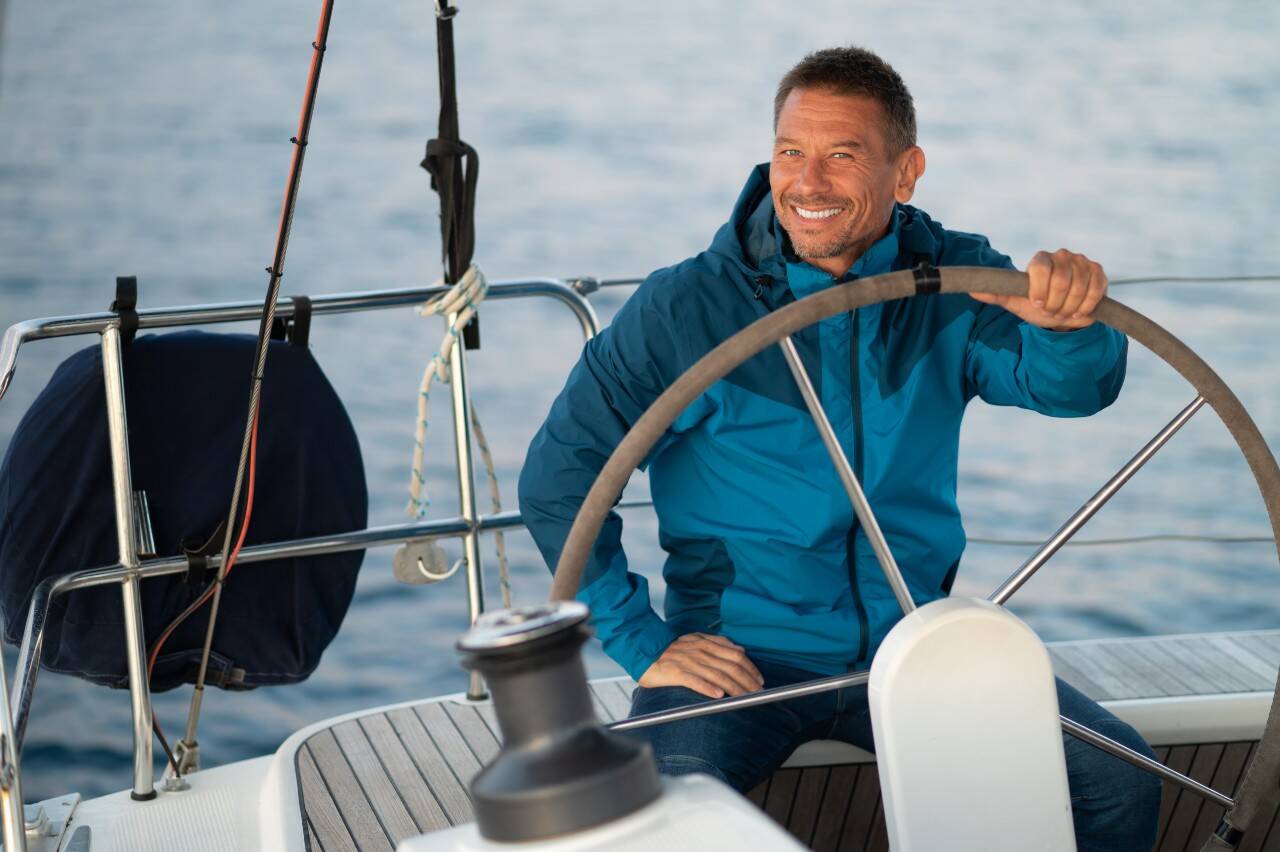
3, Take the helm: This sounds like advice for fools, but it works. When you're steering the ship, you have to focus on the waves, the course, the wind. Suddenly, your brain has something else to do besides dealing with your stomach. Plus, you can see how the ship is moving and anticipate the movement.
4,Hydrate: When you vomit, you lose fluids. Drink small sips of water or cola (which can also calm your stomach).
The Mind and Seasickness: The Power of Positive Thinking
It may sound like esoteric nonsense, but your mental state plays a huge role. If you board a ship with death in your eyes and the thought "I'm definitely going to be sick," then I guarantee you will be sick.
Fear and anxiety make your stomach churn. Relax. Breathe. Realize that seasickness is not fatal (even if it feels that way). Most people get over it after 2-3 days and are fine for the rest of the voyage. The body gets used to it.
Does this mean that the beautiful girls and tough sailors we admire in movies never vomit? Not at all. Even Admiral Nelson suffered from seasickness. It's just not written about much in history textbooks.
Enjoy your cruise without worries
The sea is an element. It is beautiful, wild, and sometimes teaches us a lesson in humility by turning our stomachs upside down. But don't let that discourage you. Seasickness is a small price to pay for the amazing experiences you'll have on a boat. For the sunsets, swimming in deserted coves, and the feeling of freedom when the wind fills the sails.
Stock up on ginger, buy some chewing gum, and in the worst case, take some powder, but above all, keep your chin up (and your eyes on the horizon). And if the worst comes to the worst? Remember that fish have to eat too.
So have a happy voyage and may your stomach only sway with laughter!
Latest from Blog

The Art of Mooring a Boat: Common Mistakes and How to Avoid Them
Becoming an experienced captain isn’t just about knowing how to handle the sails or stay on course. The real test comes when you’re approaching a pier, a buoy, or a marina. Why? Because anchoring and mooring a boat is the discipline where things most often go wrong—and often result in damaged fenders, keels, and the crew’s nerves. Let’s take a look at how to moor like a pro and avoid the most common mistakes.

Peace, quiet, and the endless sea: The magic of a boat vacation
Do you remember that vacation you came back from more exhausted than when you left? The line for breakfast, the loud entertainers by the pool, and the never-ending battle for a lounge chair—which felt more like a morning supermarket clearance sale than a well-deserved break? I certainly do. And I’m far from the only one who said to myself, “Never again.”
Trends are changing. And they’re changing dramatically. Welcome to an era where simple silence is becoming the greatest luxury.
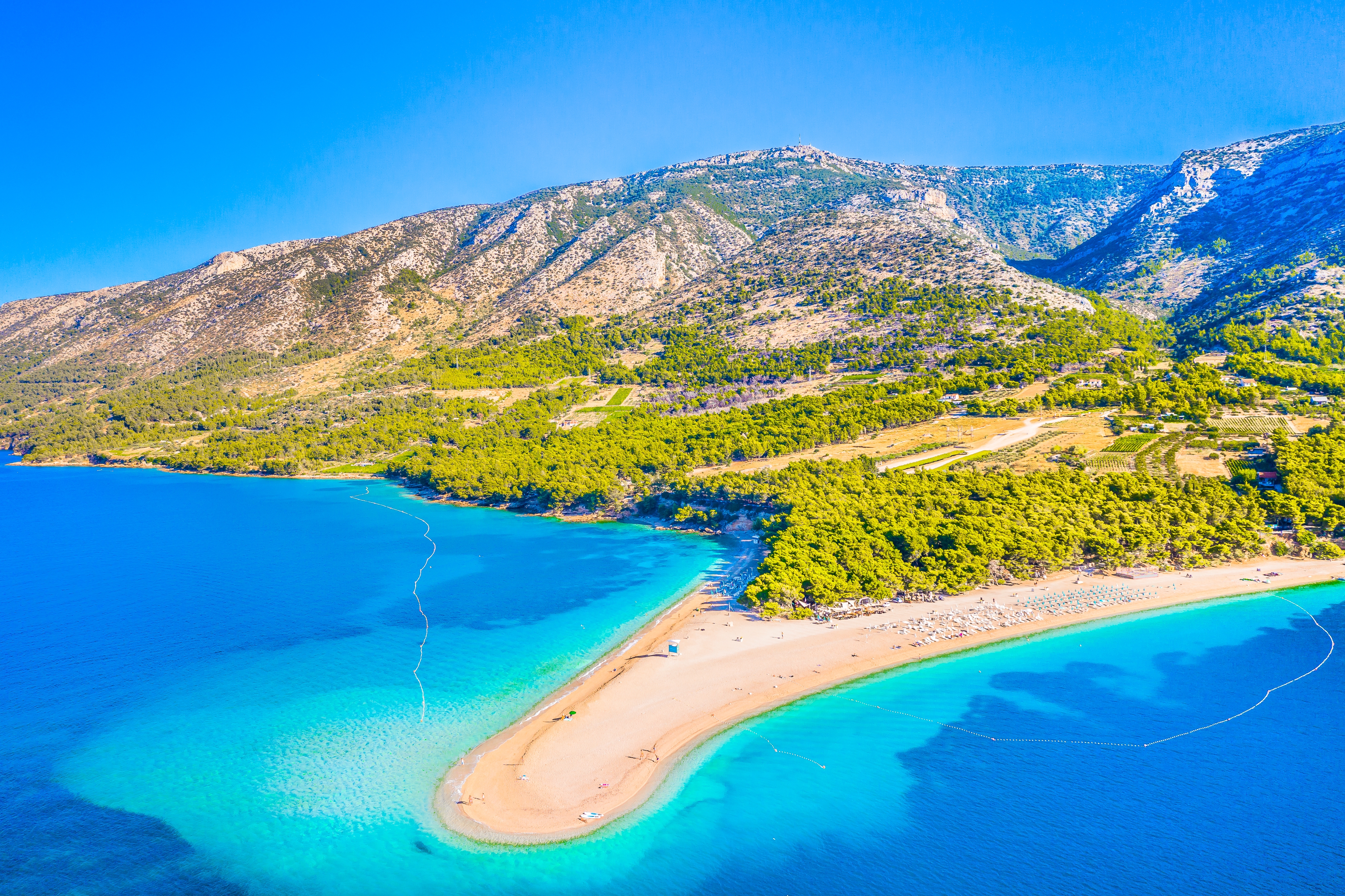
Where are the best places to swim on the Adriatic? A Guide for Sailors
Croatia is close by, with crystal-clear waters, a rugged coastline, and thousands of islands glistening on the horizon. And when you add to that the privacy of your own sailboat, which will take you exactly where you point on the map… well, tell me, can you resist? Let’s take a look together at the best places to swim in the Adriatic—and, most importantly, why yachting in Croatia is the smartest way to discover this country.

